Document Type : Original Article
Highlights
-
Article Title Persian
Authors Persian
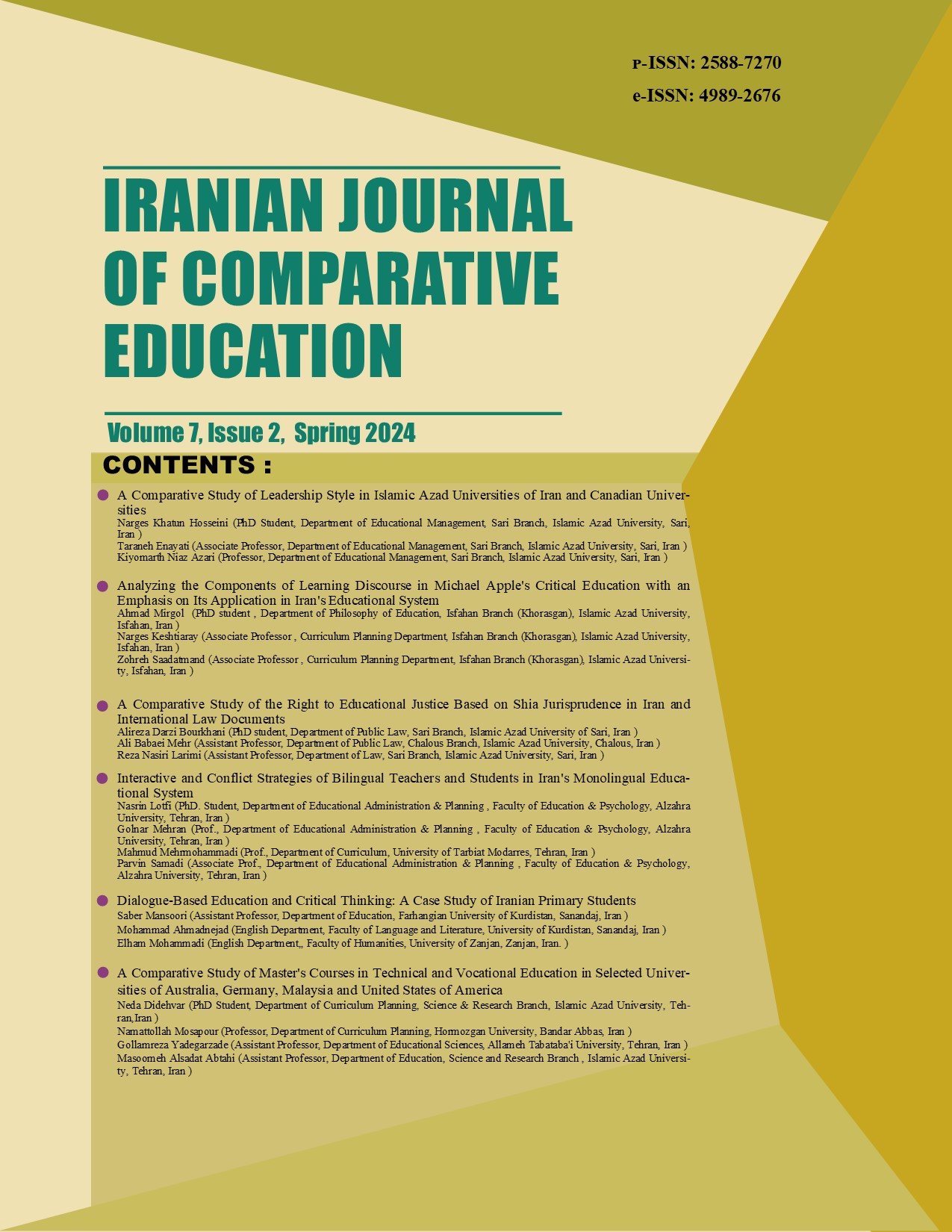
هدف پژوهش حاضر شناسائی و تعیین استراتژی های تعاملی و تعارضی آموزگاران و دانش آموزان دو زبانه در نظام آموزشی تک زبانه ایران از طریق واکاوی تجارب زیسته می باشد. روش تحقیق کیفی از نوع پدیدارشناسی، جامعه پژوهش شامل کلیه معلمان و دانش آموزان دوره ابتدایی پنج شهر منتخب در استان کرمانشاه و روش نمونه گیری ، هدفمند بود. پژوهشگران برای جمع آوری داده ها، از مصاحبه نیمه ساختاریافته با معلمان و مصاحبه گروهی با دانش آموزان و برای تجزیه و تحلیل داده ها، از روش تماتیک براون و کلارک سود جستند. اولین یافته پژوهش نشانگر آن است که واکنش معلمان و دانش آموزان در باره زبان رسمی را می توان به دو گروه استراتژی های تعاملی و تعارضی تقسیم نمود. از لحاظ ماهیت ، هر دو نوع استراتژی ها بر سه اصل پذیرش ، تسلیم و مقاومت استوارند. دومین یافته نشان داد که معلمان همزمان از استراتژی های مبتنی بر تقویت مثبت و تقویت منفی برای ترویج زبان فارسی در کلاس و مدرسه سود می جویند. سومین یافته مبین آن است که بعضی از معلمان و دانش آموزان دارای واکنش های تدافعی در برابر سیاست " یکسان سازی زبانی " نظام آموزش رسمی هستند. با توجه به یافته ها به برنامه ریزان آموزشی ایران ، افزایش نقش زبان مادری در فراگرد یادگیری دانش آموزان دو زبانه پیشنهاد می گردد.
Keywords Persian
The land of Iran includes a range of ethnic groups, each of which has its own customs, culture and language. Except Persians - who constitute the majority of the population - other Iranian ethnic groups mainly live in the provinces closed to border areas. For this reason, ethnicity and the constructive interaction of ethnic groups with each other has always been one of the most important concerns of Iranian politicians and social planners to maintain territorial integrity and national cohesion (Qamari & Hassanzadeh, 2010; Ashraf, 2004; Rajaei, 2013). With the entry into the modern world and the formation of governments in a new form, one of the effective tools to maintain, strengthen and perpetuate the national identity is the formal education system. In this regard, learning the formal language is necessary to strengthen the cohesion of the national identity so that different ethnic groups - within the framework of a collective identity - can achieve mental space and common experiences and values. The educational system can affect the socialization process of the young generation through the curriculum and promotion of the formal language (Nejad Mohammad, Najjari & Suleimanzadeh, 2018; Maqsoodi, Khamijani Farahani & Jalali, 2022). For this reason, while ethnic, religious and linguistic diversity is evident in Iran’s society, for more than a century, policymakers and educational system planners have used the policy of "Persian language as a formal language" to strengthen the unified national identity (Mohammadi, Asgarkhani & Mirabbasi, 2019; Davari, 2019).
Despite acknowledging the undeniable role of the official language in creating a common national identity, the question arises as to what is the duty of the political system - as well as the educational system - to reduce the negative consequences of the gap between the official language and the mother tongue of bilingual children. The initial response can be found in the Constitution of the Islamic Republic of Iran. Article 15 of second chapter of the Constitution indicated that "the official and common language and script of the people of Iran is Farsi". Documents, correspondence, official texts and textbooks must be in this language and script, but the use of local and ethnic languages in the press and mass media and the teaching of their literature in schools is free along with Farsi language" (Guardian Council, no date). Also it is possible to refer to the most important upstream document of Iran's educational system. The “Fundamental Reform Document of Education (FRDE) in chapter seven emphasizes to "empowering students living in deprived areas, villages, outskirts of cities, nomadic and bilingual areas with special needs, with an emphasis on creating diverse and high-quality educational opportunities (Supreme Council of Cultural Revolution, 2011).
Despite the emphasis of the upstream documents, it must be acknowledged that Iran's monolingual educational system - due to ignoring the mother tongue of non-Persian-speaking learners - always finds an obstacle against its effective communication with students. Usually, non-Persian speaking students are deprived of the necessary ability to understand the content of words and sentences in the early years of training (Hemti, Dehghan & Karani, 2022; Habibzadeh, Staki and Ghanbari Panah, 2022; Heydari, 2021). At the same time, these students have other language abilities that are not exposed to the attention of the formal education system due to their lack of conformity with the limited and one-dimensional standards of language learning. Therefore, the difference between the official language of education and the child's mother tongue makes them unable to make a proper connection between their lived experiences - result of the family environment and surrounding society - with school experiences.
In this situation, the difficulty of learning the formal language is added to the difficulty of learning the curriculum because for the child, language learning and literacy occur simultaneously. Therefore, bilingual children do not learn in equal conditions with their Persian-speaking classmates (Ezadi, 2012; Kalantari, Ramezani & Khedevi, 2018; Isanejad & Alidadi, 2017). By examining the effect of preschool education on the academic progress and social adjustment of Azeri bilingual primary school students in Khodabande city, Asareeh, Ahmadi & Abbaspour (2012) showed that between the first grade bilingual students participating in preschool education with students without this experience is a significant difference in "academic progress and social adaptation" variables. It seems that children whose mother ton